August 19, 2024
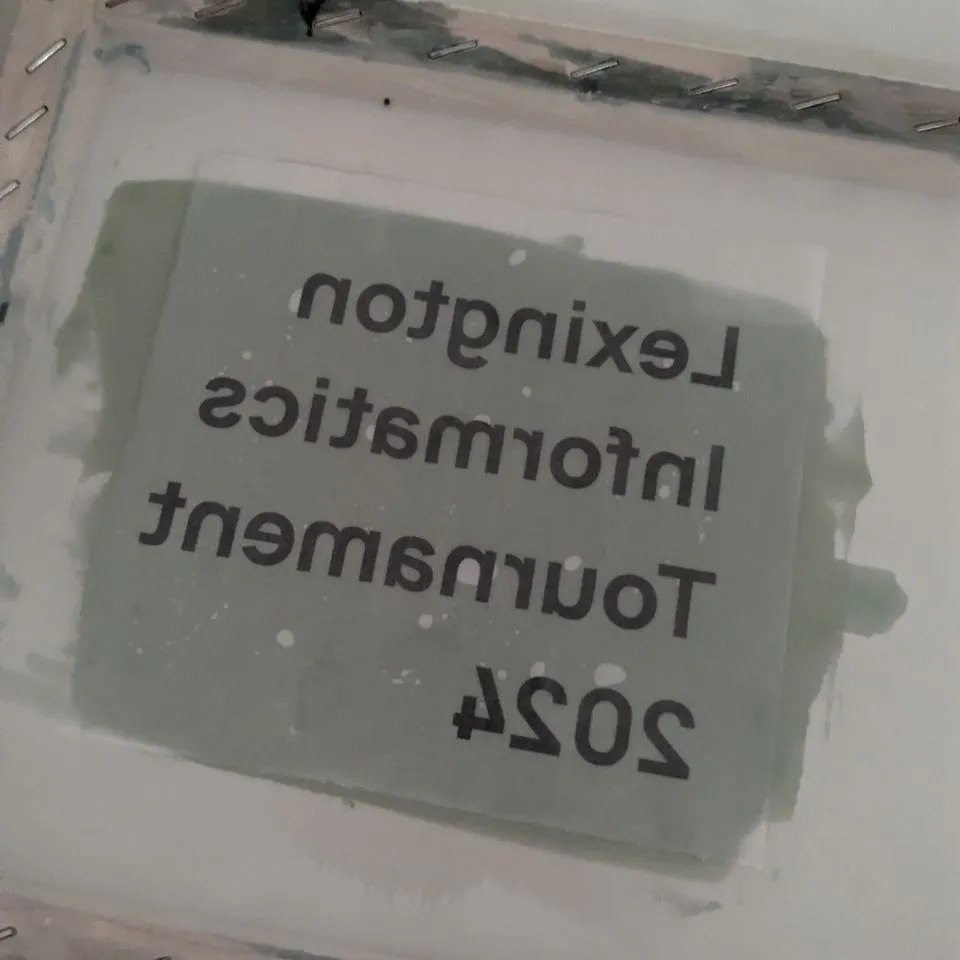
At LexMACS, we are always trying new things. So, instead of ordering custom T-shirts from a pricy online store, I decided to try to print the LIT shirts myself. I had bought the screens, photo emulsion, and ink back in March 2023 and printed only one prototype design. However, that attempt was done using the sun to expose the screen, which is unreliable, and a 3D-printed design used to block the light. I used my 3D printer at the time because I did not have transparencies.
An issue I had with using transparency film was that if was difficult to get a dark enough image from the laser printer, and also because it did not adhere to the screen. I bought a clear acrylic panel to weigh down the transparency against the screen, but it is very easy to shift the transparency when you take off the panel.
I looked online to find methods that did not need a glass/acrylic panel to weigh down the design, and I saw others using mineral oil. I used vegetable oil to coat plain paper from the printer, which allowed light to pass through the blank parts.
For my first attempt this year, I exposed the emulsion for 8 minutes.
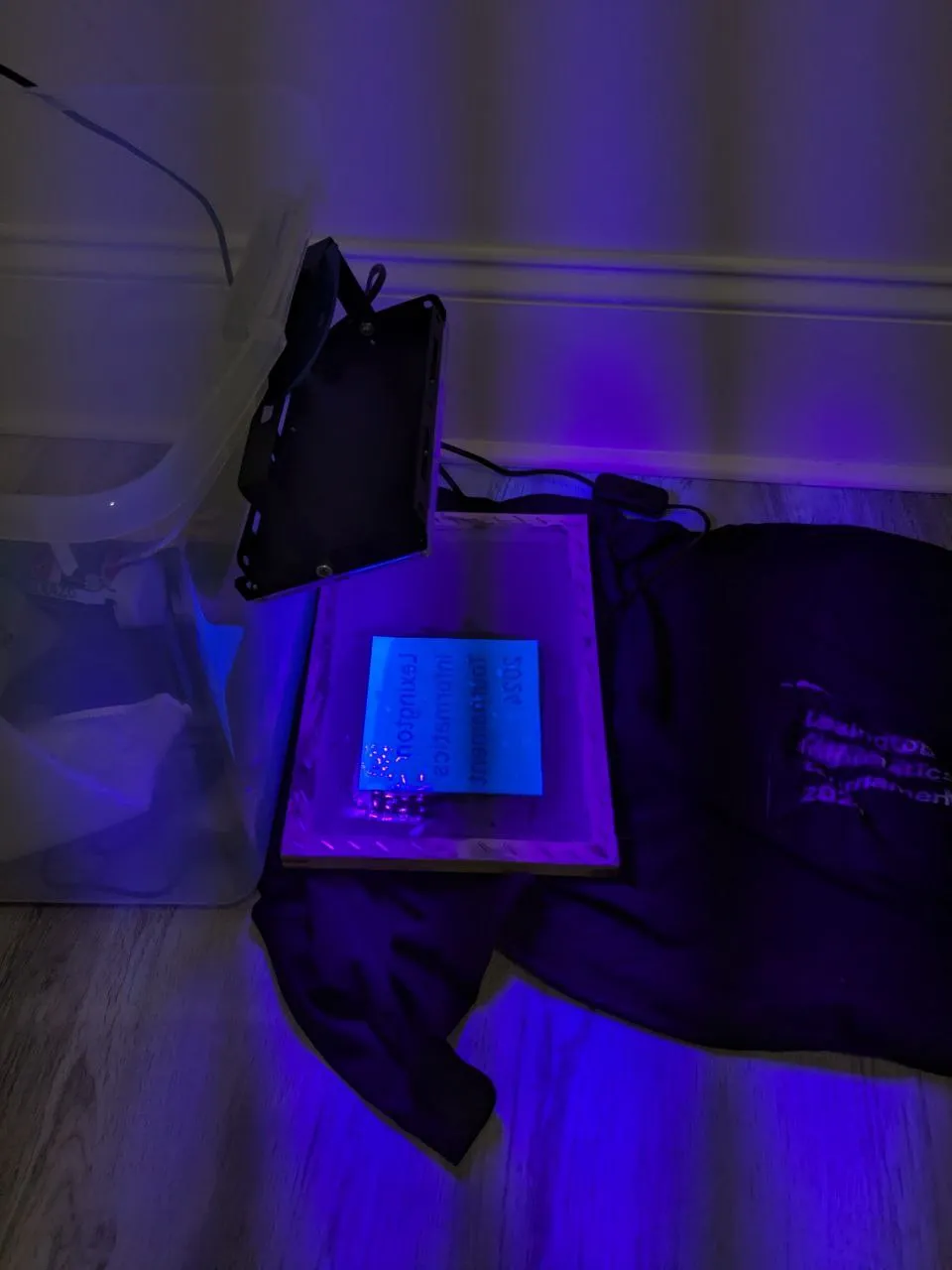
Here’s the result:
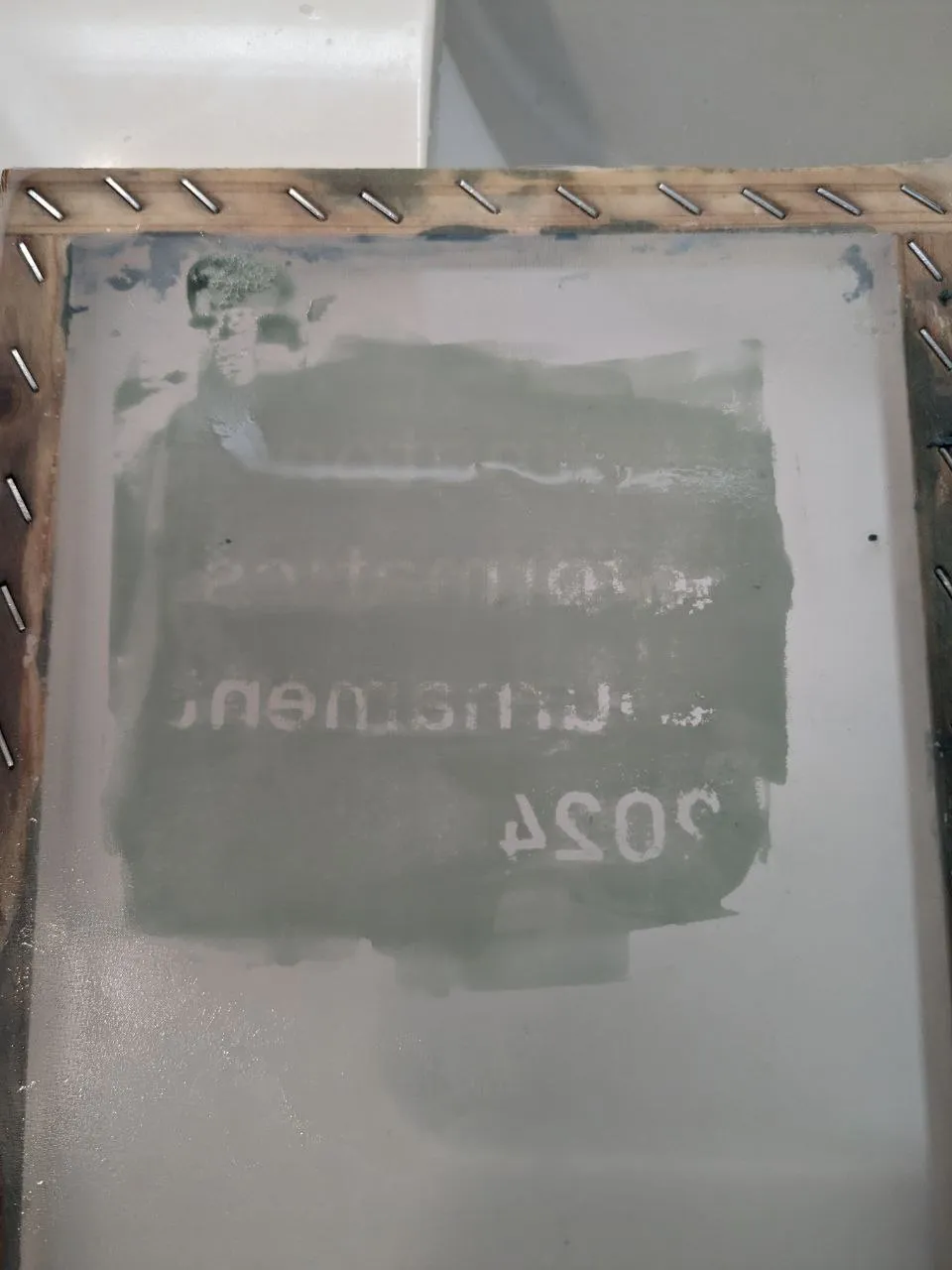
After 8 minutes, the emulsion has hardened too much (overexposed), making it impossible to wash out certain parts of the text.
After each failed attempt, I have to use emulsion remover to dissolve the hardened emulsion from the screen. This makes the interval between attempts at least 30 minutes, as I also have to wait for fresh emulsion to completely dry before exposing it.
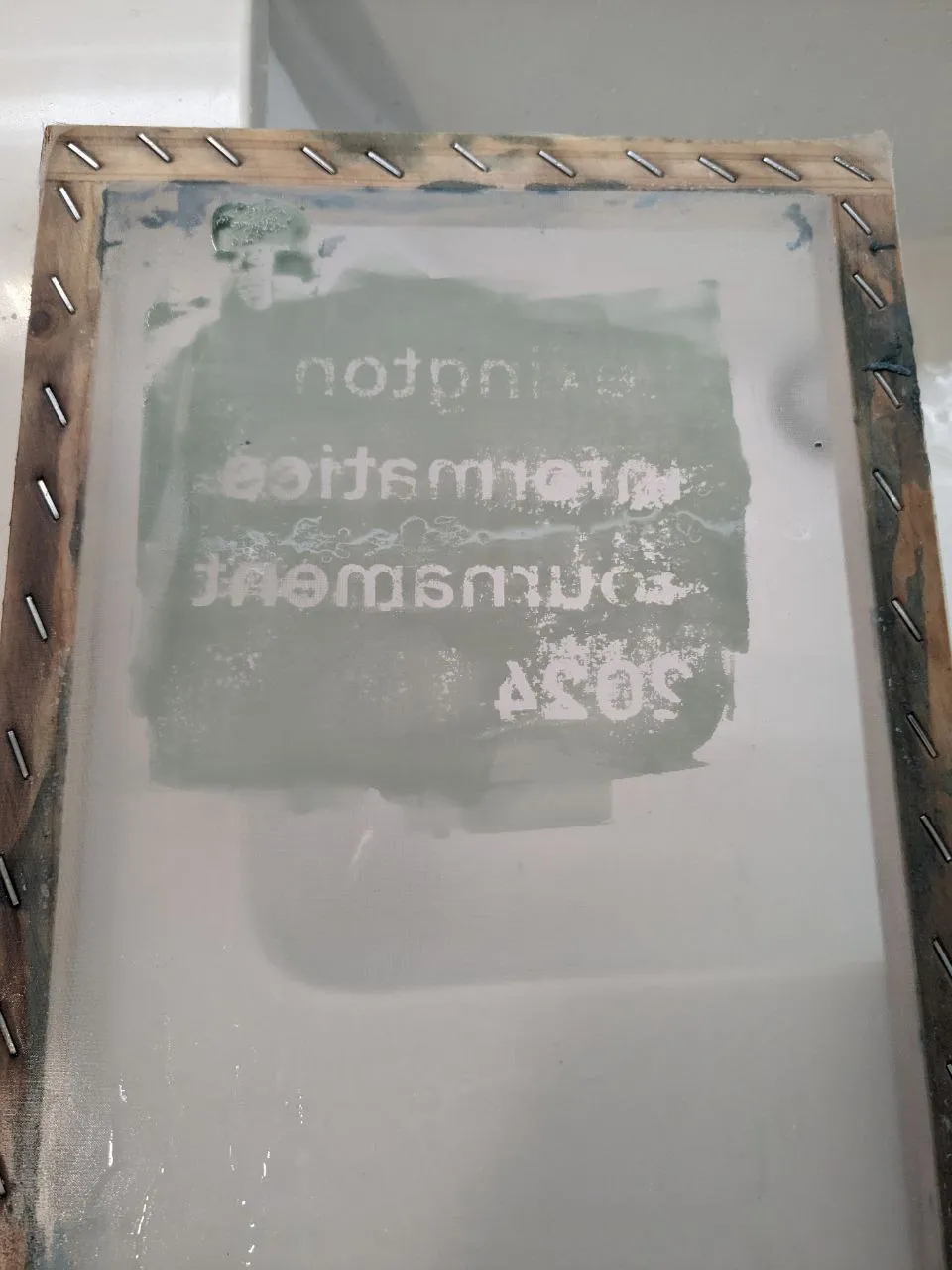
Binary search: I halved the exposure time to 4 minutes. This one was very hard to wash out (overexposed again). It was here that I realized that I should use the stronger setting in the shower instead of the bathroom sink faucet to wash out the emulsion.
However, it was still not possible to remove the emulsion without using a brush, which destroyed the surrounding emulsion as well.
This time, I exposed the emulsion for 2 minutes.
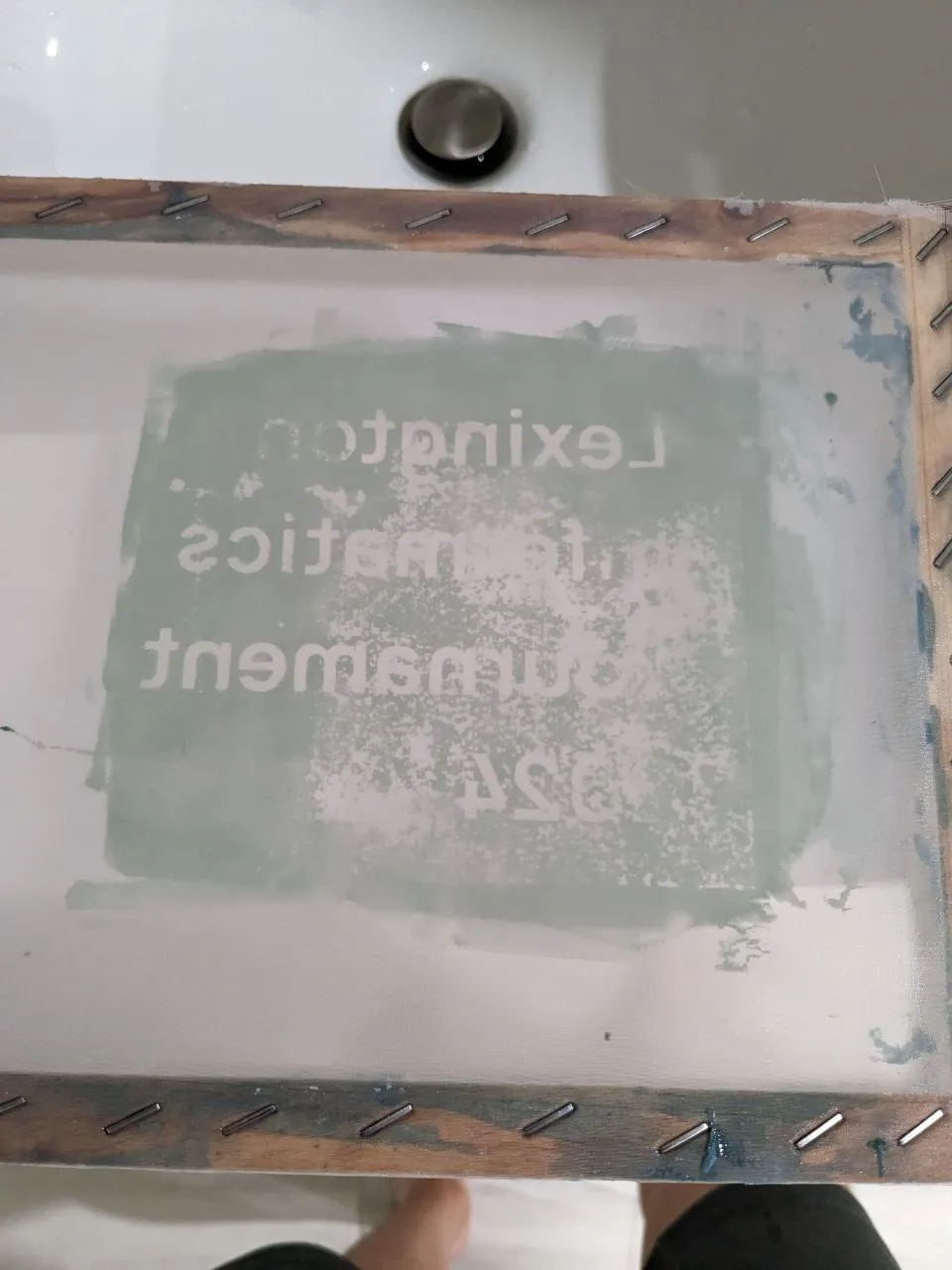
Too much washed out, meaning it was underexposed and that 2 minutes was not enough.
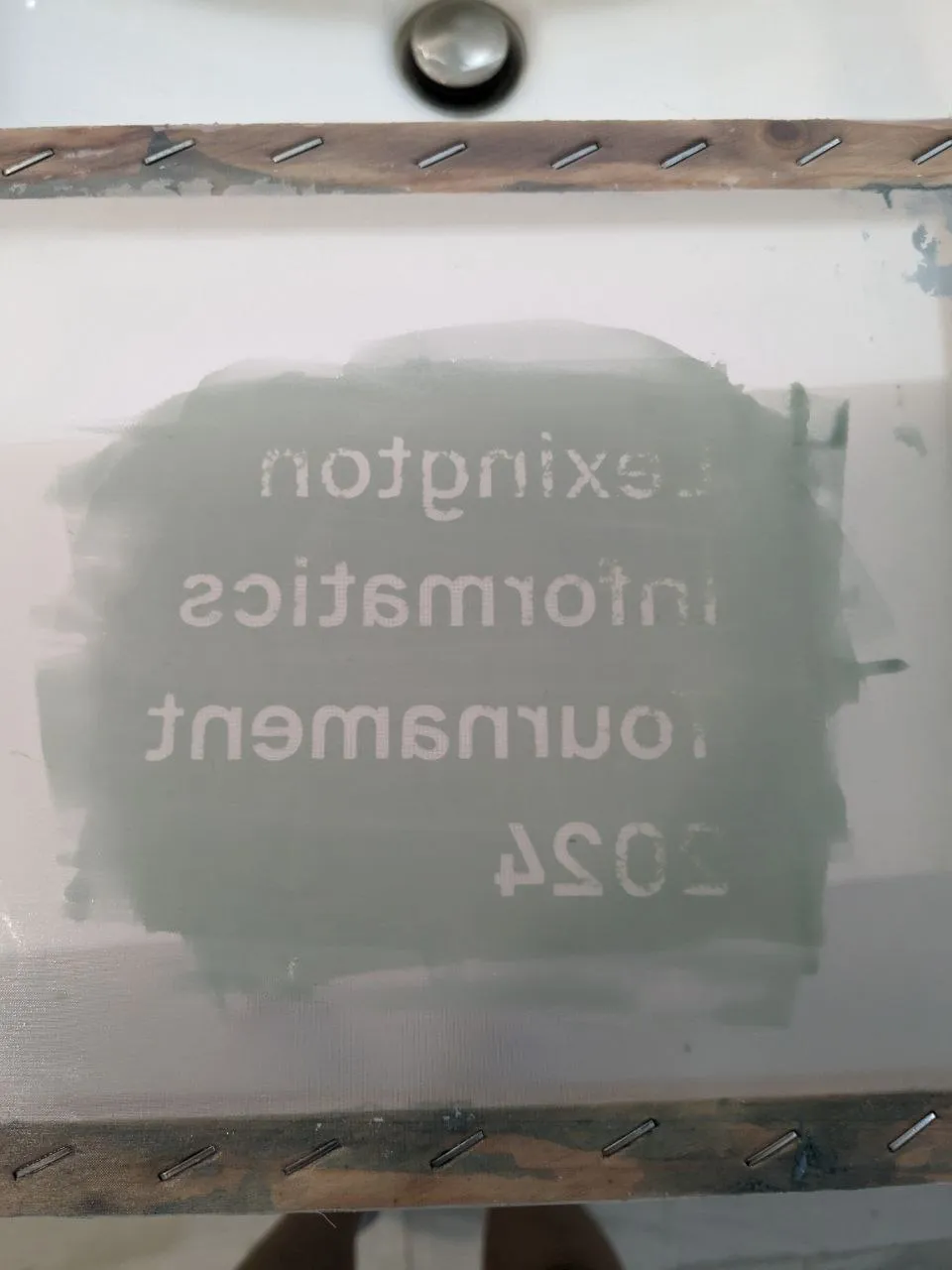
This was a bit overexposed because some of the letters refused to wash out.
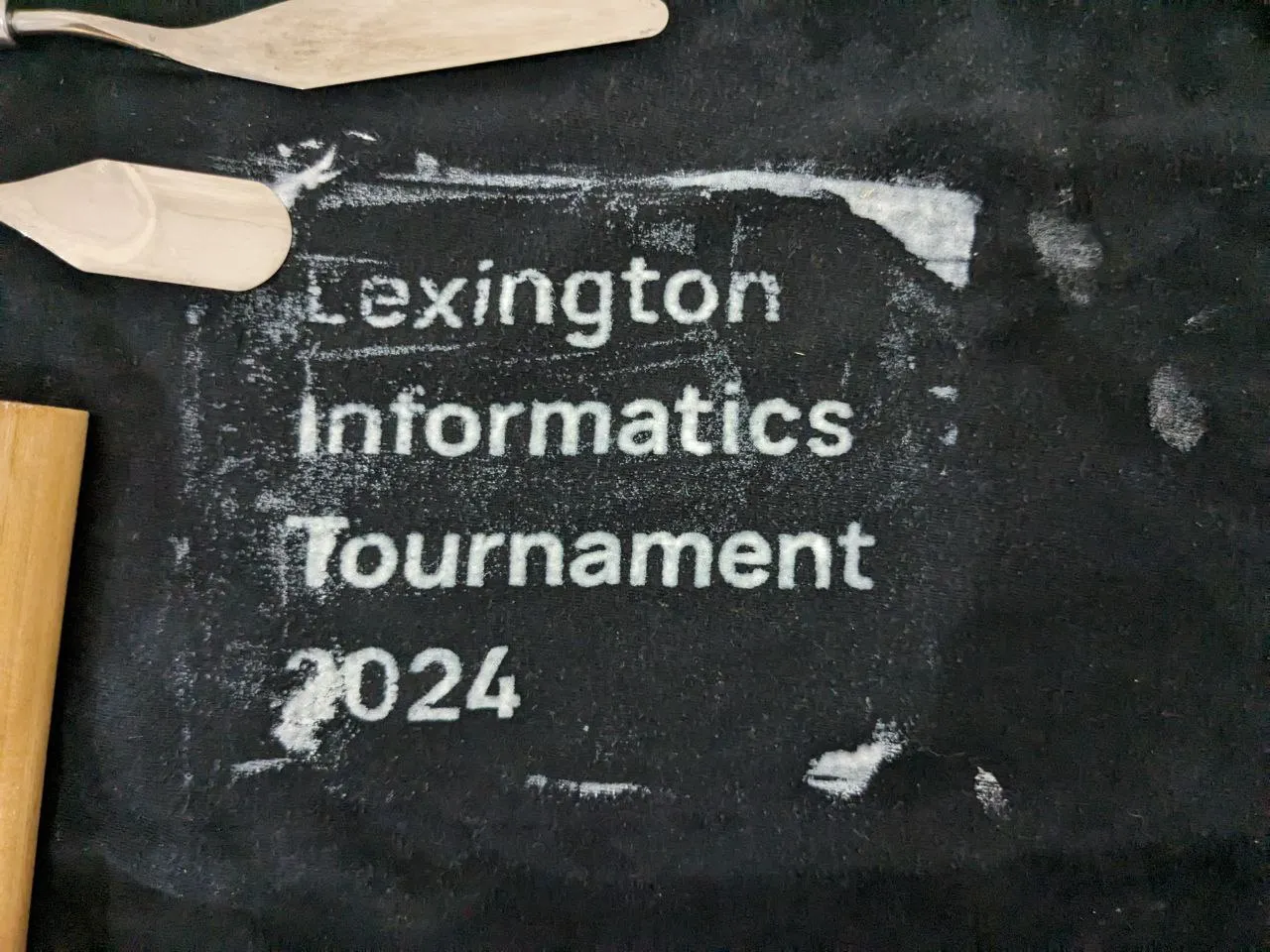
I still tried printing with it, but the first print was a little fuzzy, probably because I didn’t let the screen dry after washing it.
I tried printing again after drying the screen and got much cleaner results!
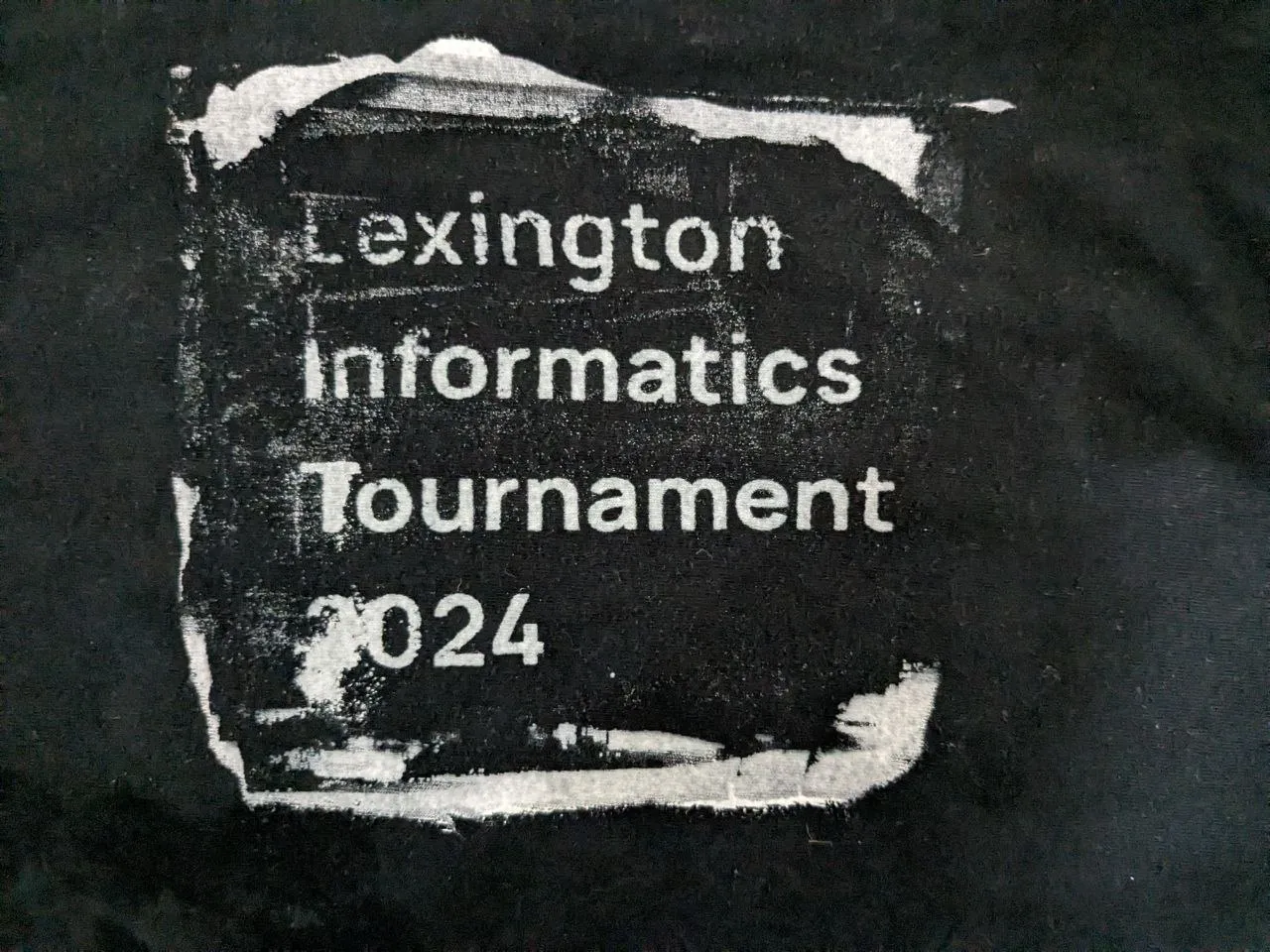
I’ll remember to let the screen dry next time before printing to keep those edges really sharp!
Next, since I was getting closer to the optimal exposure time, I decided to print a tentative LIT shirt design. I exposed the emulsion for 2.5 minutes, and all the other steps are the same.
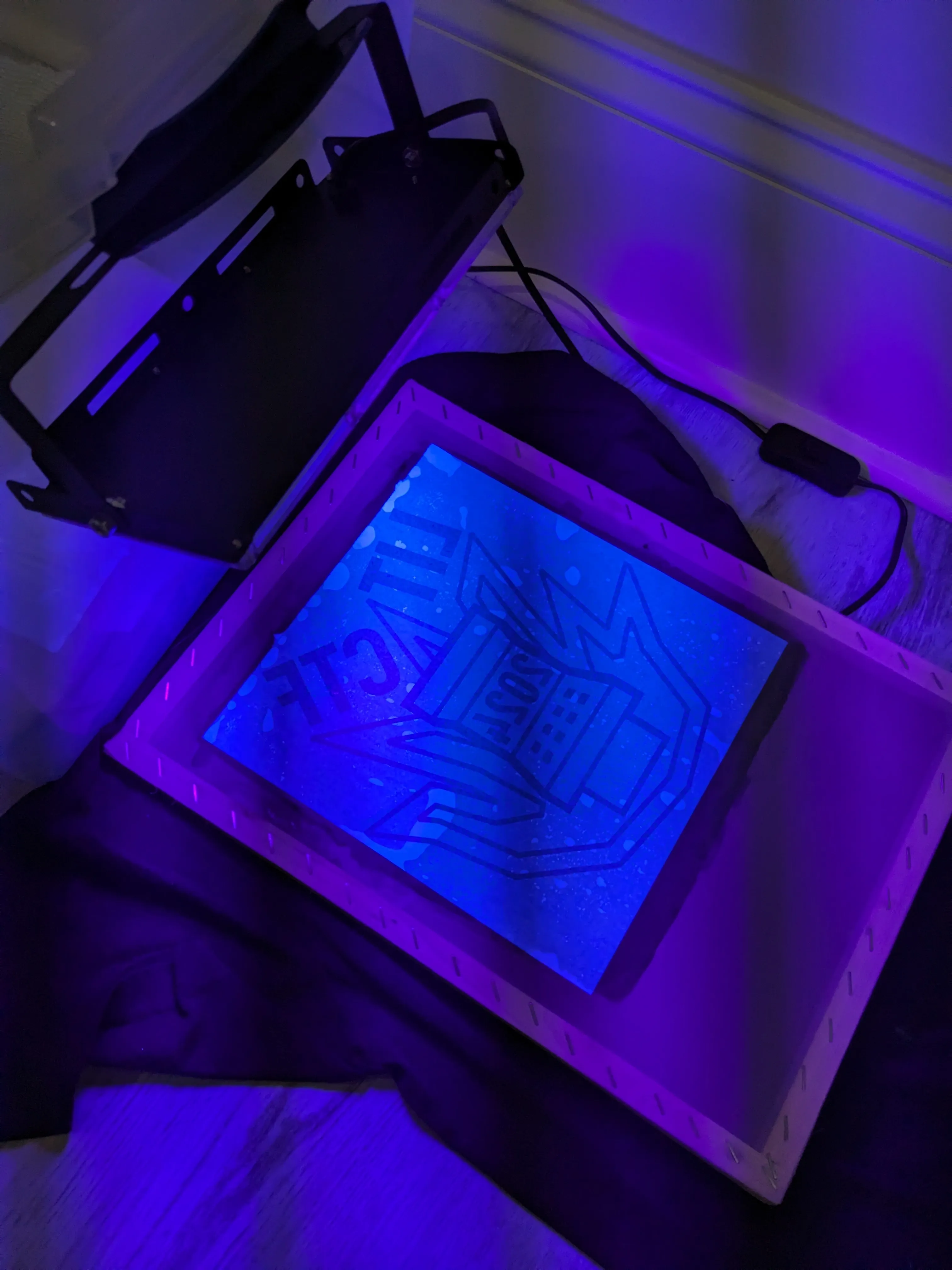
The design is placed upside down so that when the screen is flipped over to print onto a surface the design is not mirrored.
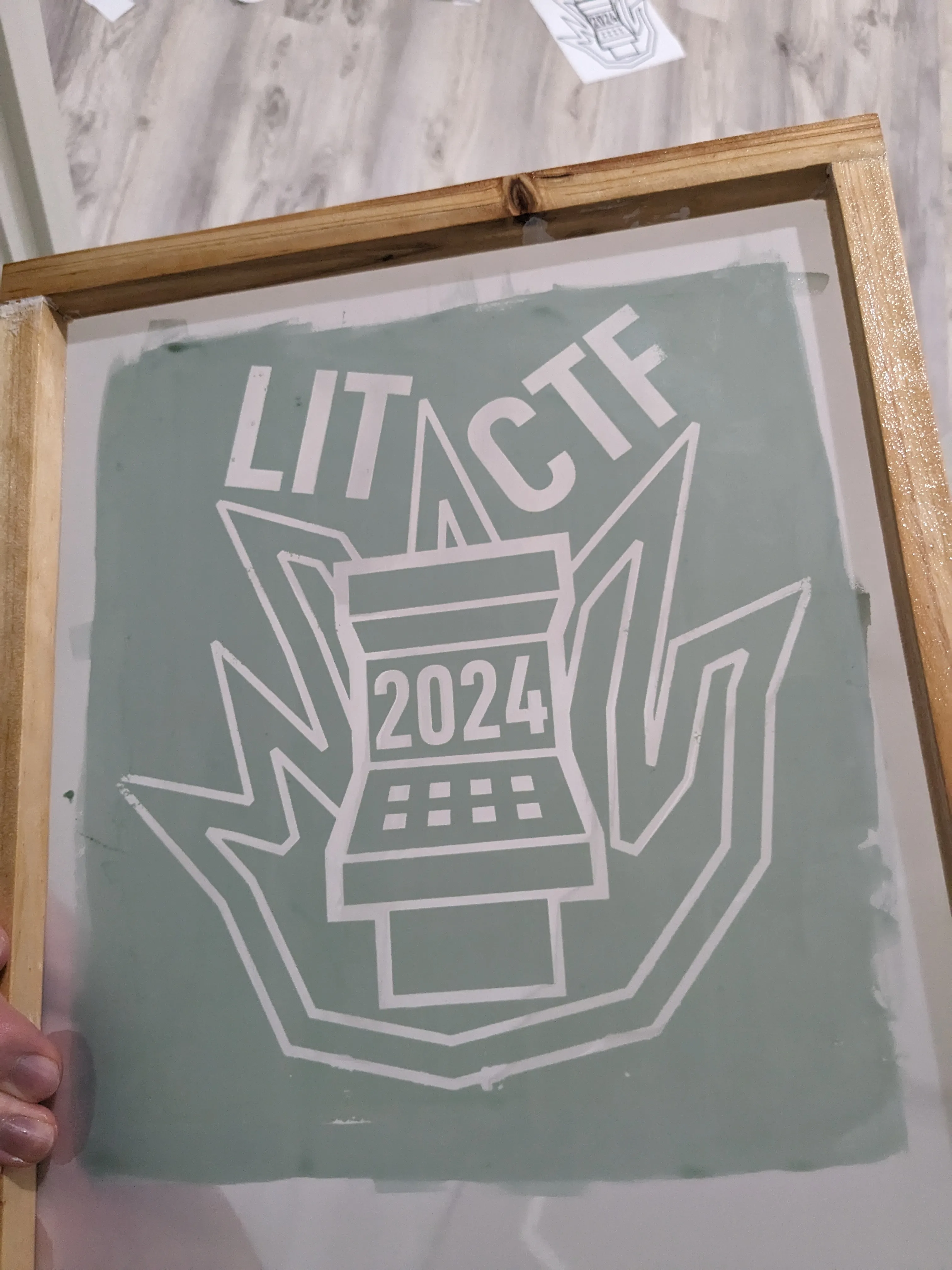
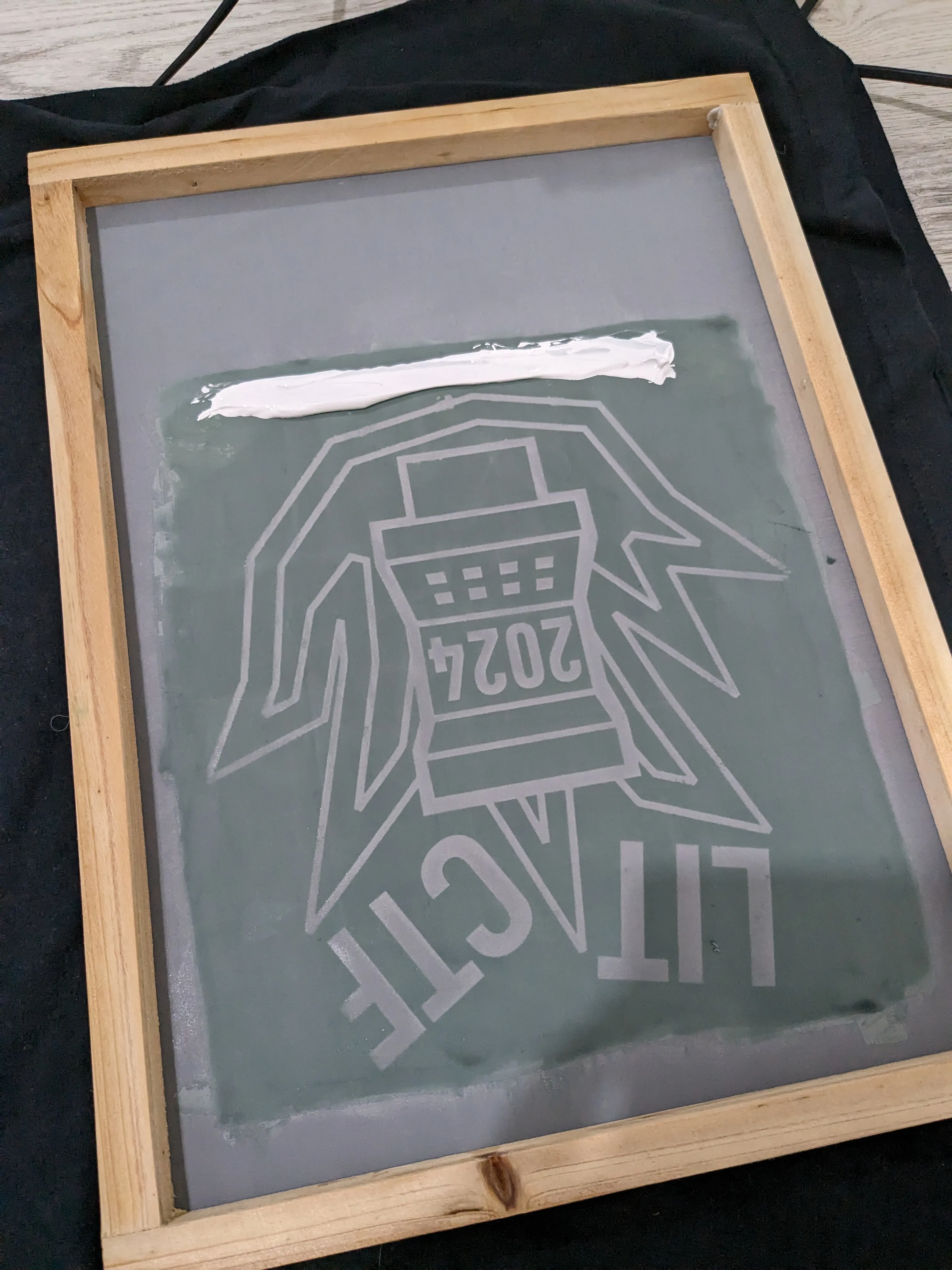
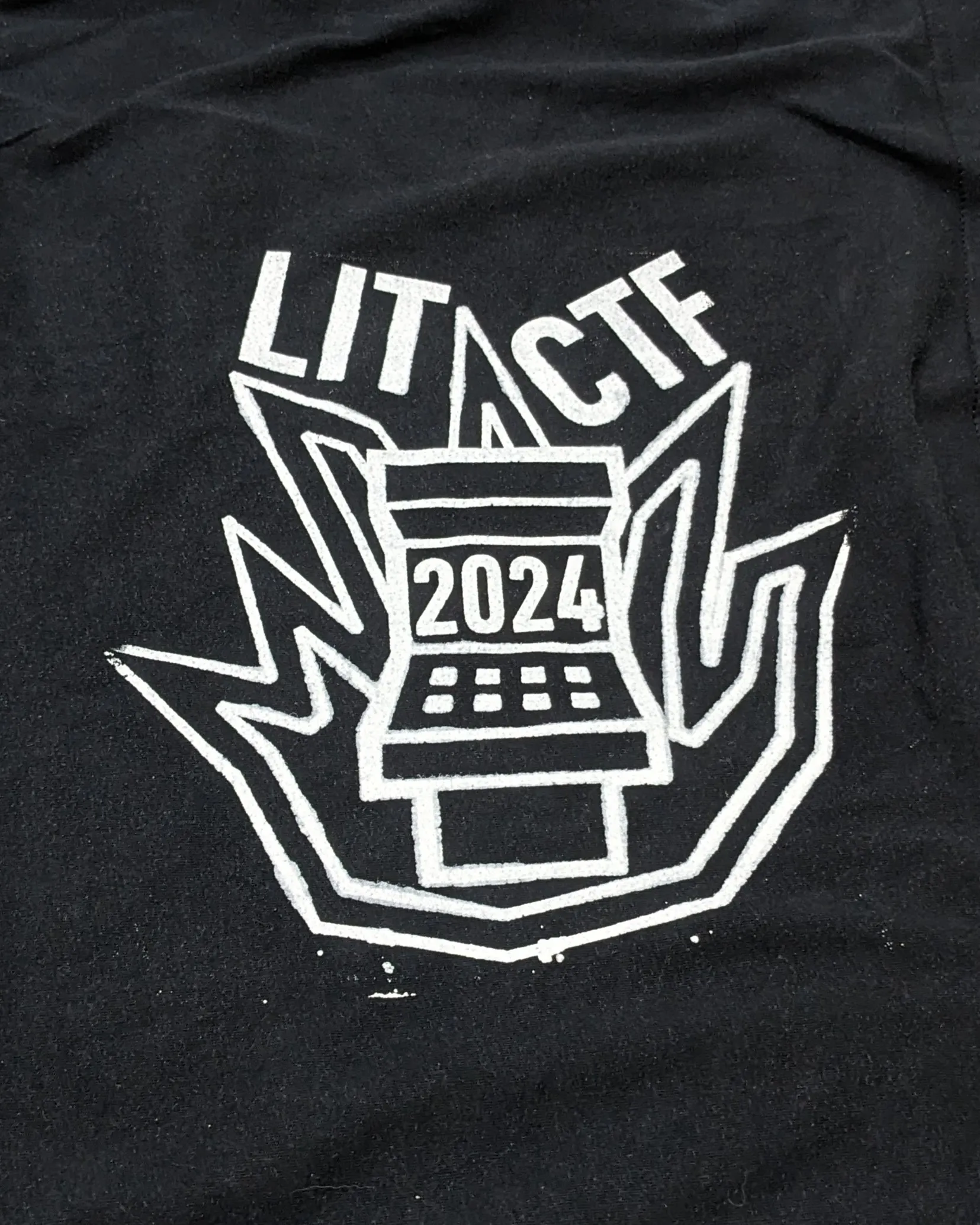
I used a household iron and parchment paper for 2 minutes to heat set the ink and then tossed the shirt into the washing machine to test the print’s durability.
This is not the final design, but it proves that screen printing is viable for printing any custom design. Some of the edges in the design are fuzzy because I added too much ink when flooding the screen. I also still have a few things to improve or add, like multi-color prints.